DERHY AI
How a Quebec notarial firm deployed Claude-powered AI to cut interview time in half — not by replacing notaries, but by handling the routine so they can focus on what only a human expert can do.
Visit website →Notaries drowning in paperwork instead of practising law
Me Dan Derhy runs a notarial practice in Quebec. Notaries here handle some of the most consequential documents in people’s lives — wills, protective mandates, powers of attorney, trusts. Each act requires a structured interview to collect dozens of data points, cross-reference them against the Civil Code of Quebec, and produce a legally binding document that must be flawless.
The problem was not competence. It was time. A typical notarial interview takes 45–60 minutes of structured data collection followed by 20+ minutes of manual data entry into document templates. Most of that time is spent on routine questions with predictable answers — name, address, marital status, beneficiaries — while the notary’s real expertise in legal strategy, risk identification, and client counselling gets squeezed into whatever time is left.
Multiply that across every client, every act type, every dossier. The notary becomes a data entry clerk who happens to have a law degree. Meanwhile, the legal nuances that actually require human judgment — clause de survie, liquidateur remplaçant, cross-act consistency, proactive risk warnings — get rushed or missed entirely because there is no time left for them.
Dan didn’t want to replace notaries with AI. He wanted to give notaries their time back — so they could spend it on the work that actually requires a notary.
Claude as the notary’s structured interview partner
We built Derhy AI as a domain-specific AI assistant powered by Anthropic’s Claude. The system does not generate legal text, does not make legal decisions, and does not replace the notary. It handles the structured interview — the routine data collection that consumes most of the notary’s time — so the human expert can focus on legal strategy and client relationships.
Claude conducts structured interviews using a six-tool architecture designed specifically for notarial workflows. It asks the right questions in the right order, extracts structured data from conversational responses, proposes multiple-choice options for closed questions, and tracks completion percentage in real time. When a notary types “The client is Jean Dupont, born January 15, 1960, married” — Claude extracts three fields simultaneously, confirms confidence levels, and moves to the next relevant question.
The system detects two interview modes automatically. For live interviews, Claude asks one question at a time with clickable choice buttons. When a notary uploads existing notes from a client meeting — a Word document, a PDF, handwritten notes — Claude switches to bulk extraction mode, pulling every available data point in one pass and then asking only about the gaps.
Every legal recommendation includes numbered citations to the Civil Code of Quebec, the Loi sur le notariat, and applicable regulations — with direct links to legisquebec.gouv.qc.ca. The notary sees exactly which article supports each suggestion. If the AI’s recommendation differs from the firm’s template, it flags the discrepancy: “The template contains X, but Article Y of the C.c.Q. states Z. Please validate with Me Derhy.” The notary decides. Always.
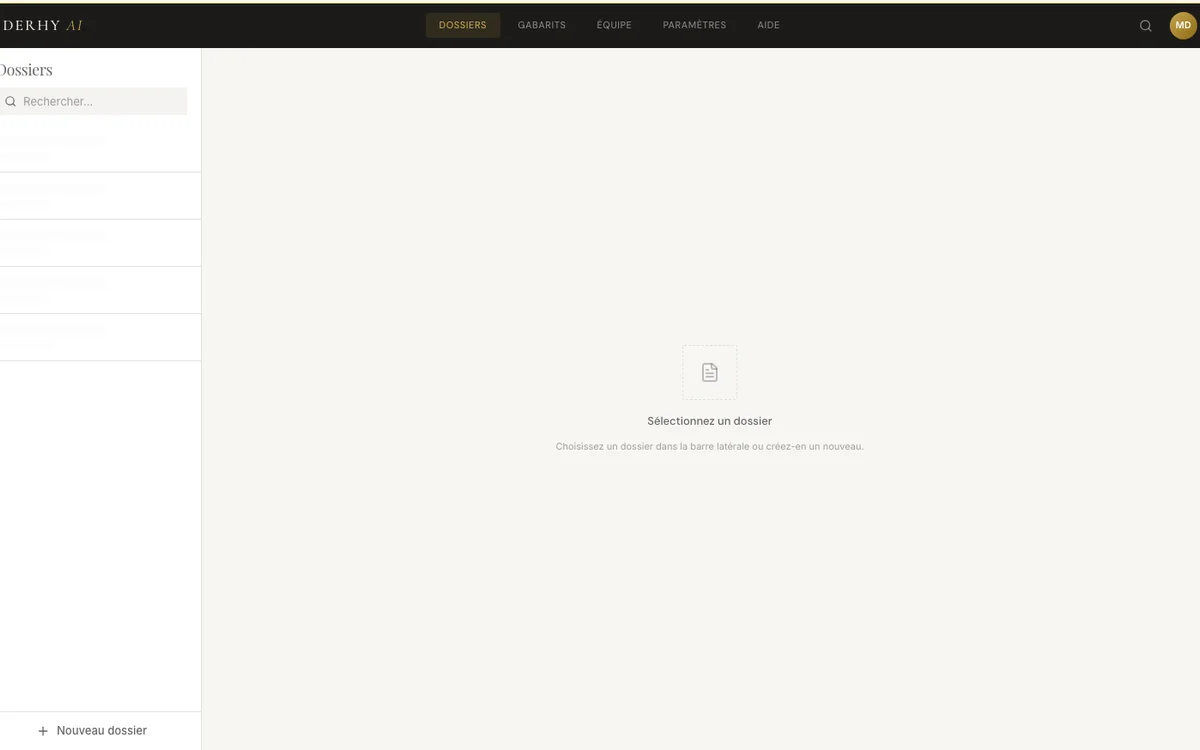
Before any document can be generated, a legal review tool validates the entire dossier — checking for missing required fields, legal inconsistencies (a sole beneficiary cannot also be the trustee), cross-act conflicts (mismatched addresses between a will and a mandate), and proactive warnings specific to each act type. Blockers prevent generation. Warnings are advisory. The notary reviews everything before proceeding.
The platform handles family-level dossier management. A couple planning their estate creates one dossier with multiple personas and multiple acts. Claude maintains consistency across all of them — flagging if the address on the wife’s mandate differs from the husband’s will, or if the same person is named as both executor and sole beneficiary across related documents.
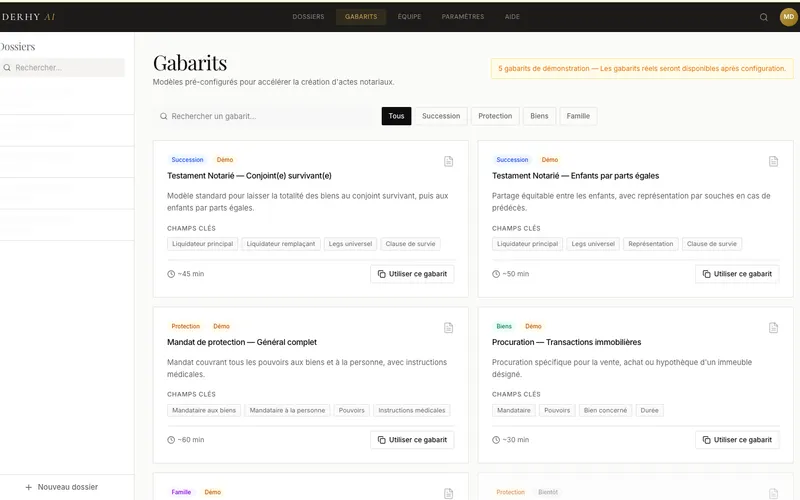
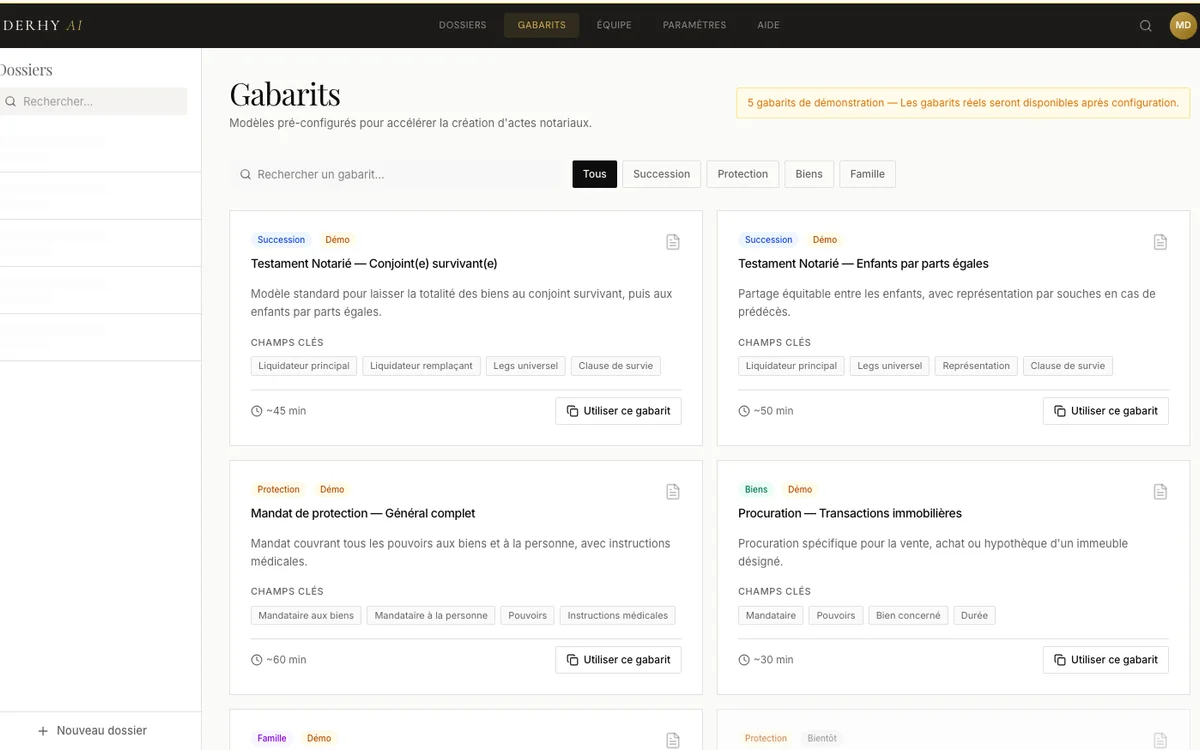
Document generation uses the firm’s existing Para-Maître templates. Claude fills them — it does not write them. The legal language in the final document is identical to what the firm has always used. The AI’s job ends at data collection and validation. The notary’s signature is what makes it law.
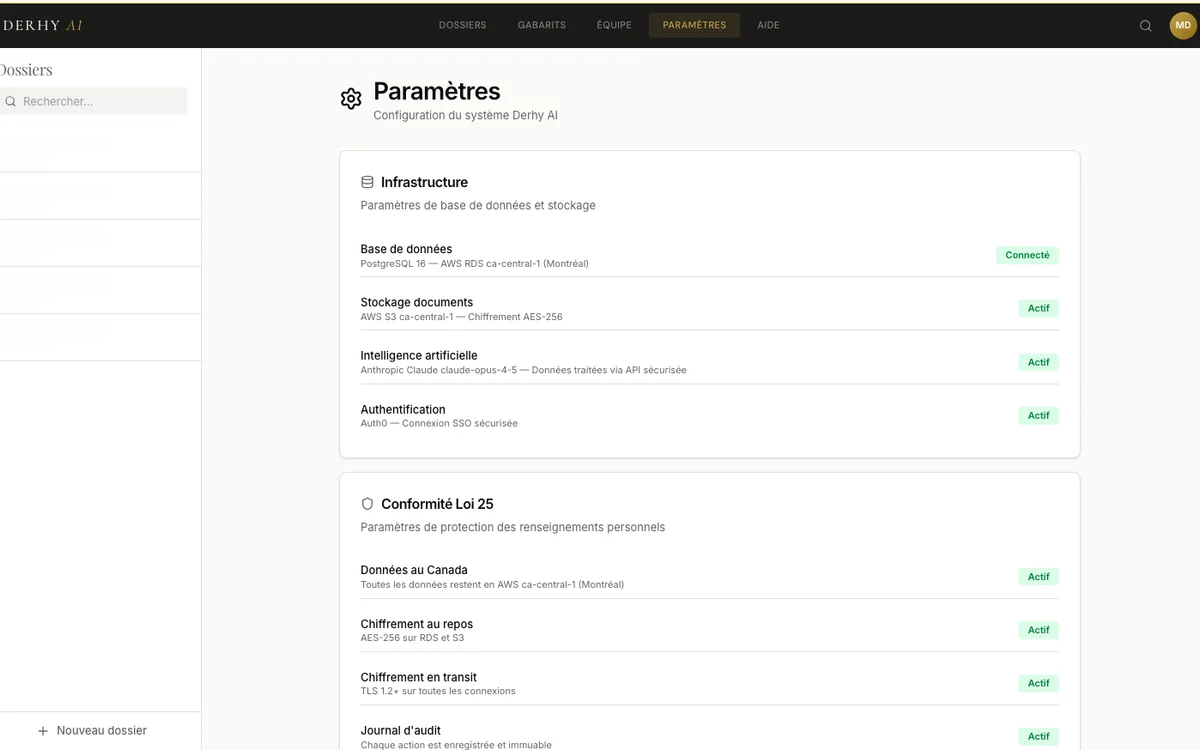
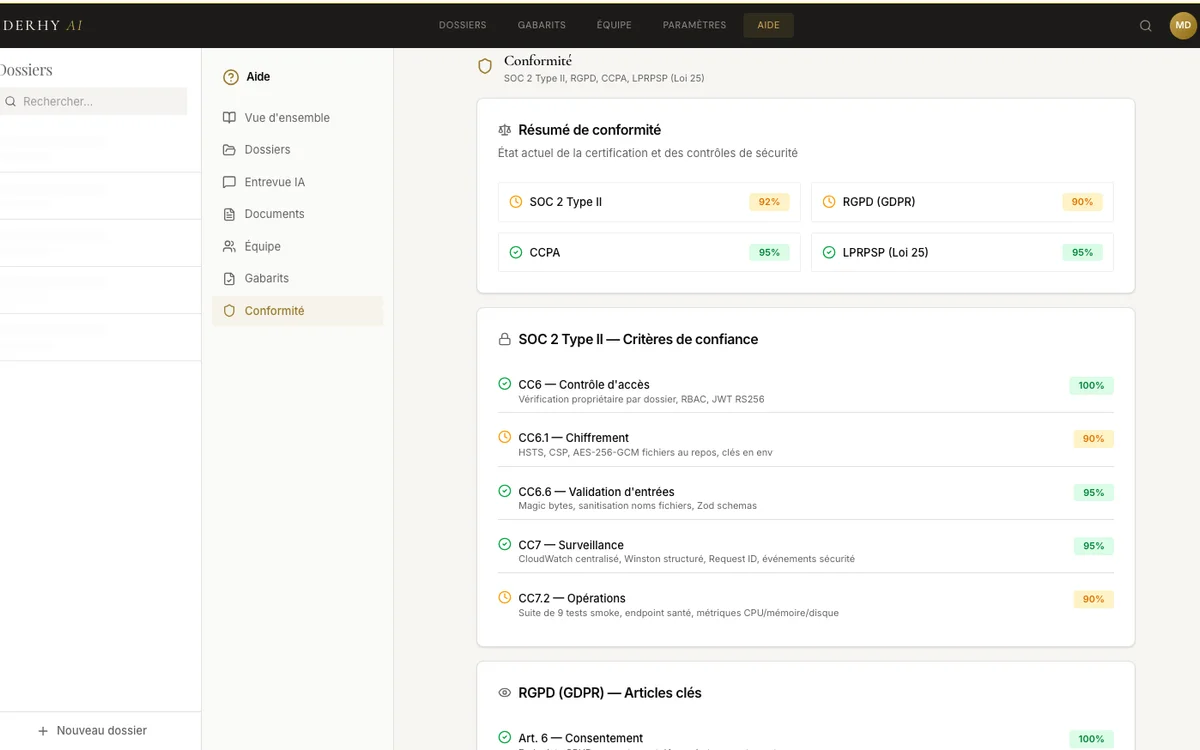
Security and compliance were non-negotiable. Notarial documents contain some of the most sensitive personal information that exists — family composition, assets, medical wishes, estate plans. The Chambre des notaires du Québec sets strict requirements for how this data must be handled. We built the entire platform on AWS infrastructure in the ca-central-1 (Montreal) region to ensure full Quebec data sovereignty under Law 25 (LPRPSP). All data at rest is encrypted with AES-256-GCM. All data in transit uses TLS 1.2+. Authentication runs through Auth0 with multi-factor enforcement and role-based access control — the notaire principal sees all dossiers, individual notaries see only their own. Every action is logged in an immutable audit trail. The platform tracks compliance against SOC 2 Type II, GDPR, CCPA, and Quebec’s Law 25 — with a built-in compliance dashboard that shows the firm’s current posture across all frameworks in real time. File uploads are validated at the byte level to prevent injection attacks. This is not security theatre. When you are handling documents that determine who inherits someone’s estate or who makes medical decisions if they become incapacitated, security is the foundation everything else depends on.
Derhy AI is not an AI that practises law. It is an AI that handles the parts of notarial work that do not require a law degree — structured data collection, consistency checking, completion tracking, and template filling. The result is a notary who spends their time on legal judgment, risk identification, and client counselling instead of typing names and addresses into forms. That is what “AI-augmented” actually means: not replacing the expert, but removing the bottleneck that prevents the expert from doing expert work.
"The AI doesn’t practise law. It gives me back the time I need to practise law properly — to listen to my clients, identify risks they haven’t considered, and make sure every document is right. That’s what technology should do for a profession like ours."
More success stories
 B2B · Digital Transformation · Electrical Distribution
 LUMEN
How Quebec's largest electrical distributor achieved 4 consecutive years of double-digit online sales growth by making digital the default way B2B customers do business.
 B2B/B2C · Shopify Plus · Custom App
 HUSKY BOUTIQUE
How a 55-year-old Quebec institution serving 20,000+ workers annually replaced a one-size-fits-all custom site with four distinct buying experiences on Shopify Plus — consumers, schools, enterprises, and corporate uniform programs.
Ready to transform your B2B commerce?
Let's discuss how we can help your business grow on Shopify Plus.
Contact us